
6 great customer journey map templates for businesses

Customer journey mapping is really important to ensure you fully understand your opportunities for garnering and applying customer feedback. You can find your way through this challenge in our Journey Mapping Guide.
A critical step in putting customer journey mapping into practice is drawing it out in a logical way. It doesn’t have to look perfect; you’ll probably go through a few iterations. Having a customer journey map template to work from would sure come in handy.
What should a customer journey map template include?
A customer journey map template should bring together the key stages, interactions and experiences that shape a customer’s relationship with your business. The exact format will depend on the journey you’re mapping, but a useful template will typically include:
- Customer persona: Who is taking the journey and what are they trying to achieve?
- Journey stages: The main phases the customer moves through, from initial awareness and consideration to purchase, onboarding, support and beyond.
- Customer goals: What the customer wants to achieve at each stage.
- Actions: What the customer is doing as they move through the journey.
- Touchpoints: Where and how the customer interacts with your business, such as your website, emails, sales team, product or customer support.
- Questions and expectations: What the customer wants or needs to know at different points in their journey.
- Customer feedback: What customers are actually telling you about their experience at different touchpoints.
- Opportunities for improvement: Areas where you can reduce friction or create a better customer experience.
Not every journey map needs to include everything. The aim is to choose the elements that help you understand the experience from the customer’s point of view and identify where improvements can be made.
Turn your customer journey map into real customer insight
Once you’ve mapped your customer touchpoints, Customer Thermometer helps you find out what customers are actually experiencing at each one with quick, one-click feedback.
We’ve researched a varied bunch of journey map templates to help your thinking. So sharpen your Sharpies, unwrap a bumper pack of Post-its or fire up your paint app of choice. This is going to be an adventure!
“The Equilibrium” Journey Map Template 1
This template from Meridian Health is persona driven and, like most of the templates reviewed here, breaks the journey into logical stages. The biggest feature is the colored chart showing a line of equilibrium above and below which are increases and decreases in customer satisfaction.
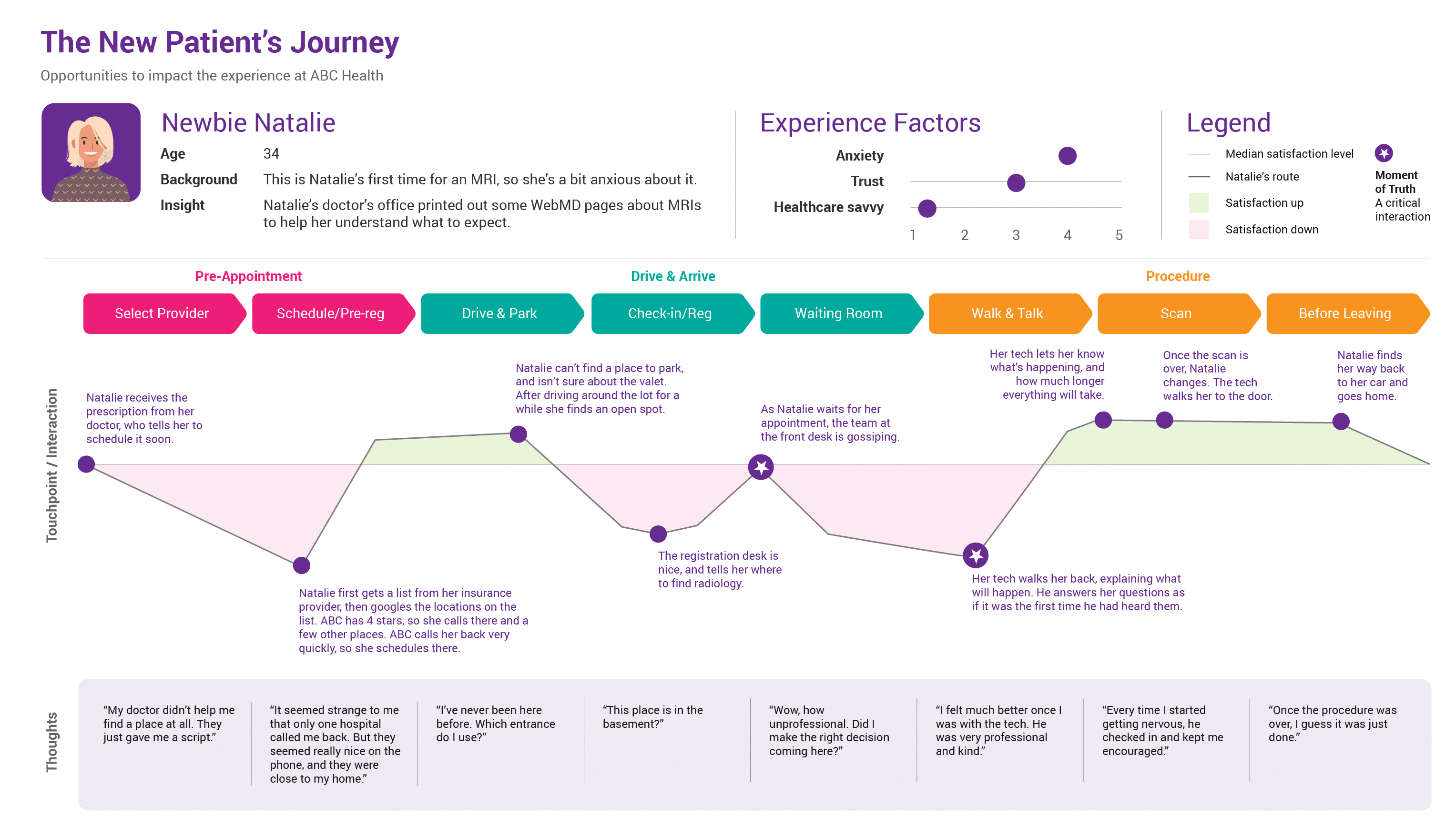
Good for: seeing the world through the customer’s eyes in rich detail.
Not so good for: clearly pinpointing structured touchpoints and the systems that govern them.
“The Kaleidoscope” Journey Map Template 2
This template builds on some of the attributes of ‘Equilibrium’ in being persona driven and showing above/below the line satisfaction over time. We love the richness of added detail around touchpoints, actions and opportunities. However, the multi-colored key (with 8 colors denoting very specific emotions like joy, disgust, anticipation and more) might be overdoing it somewhat.
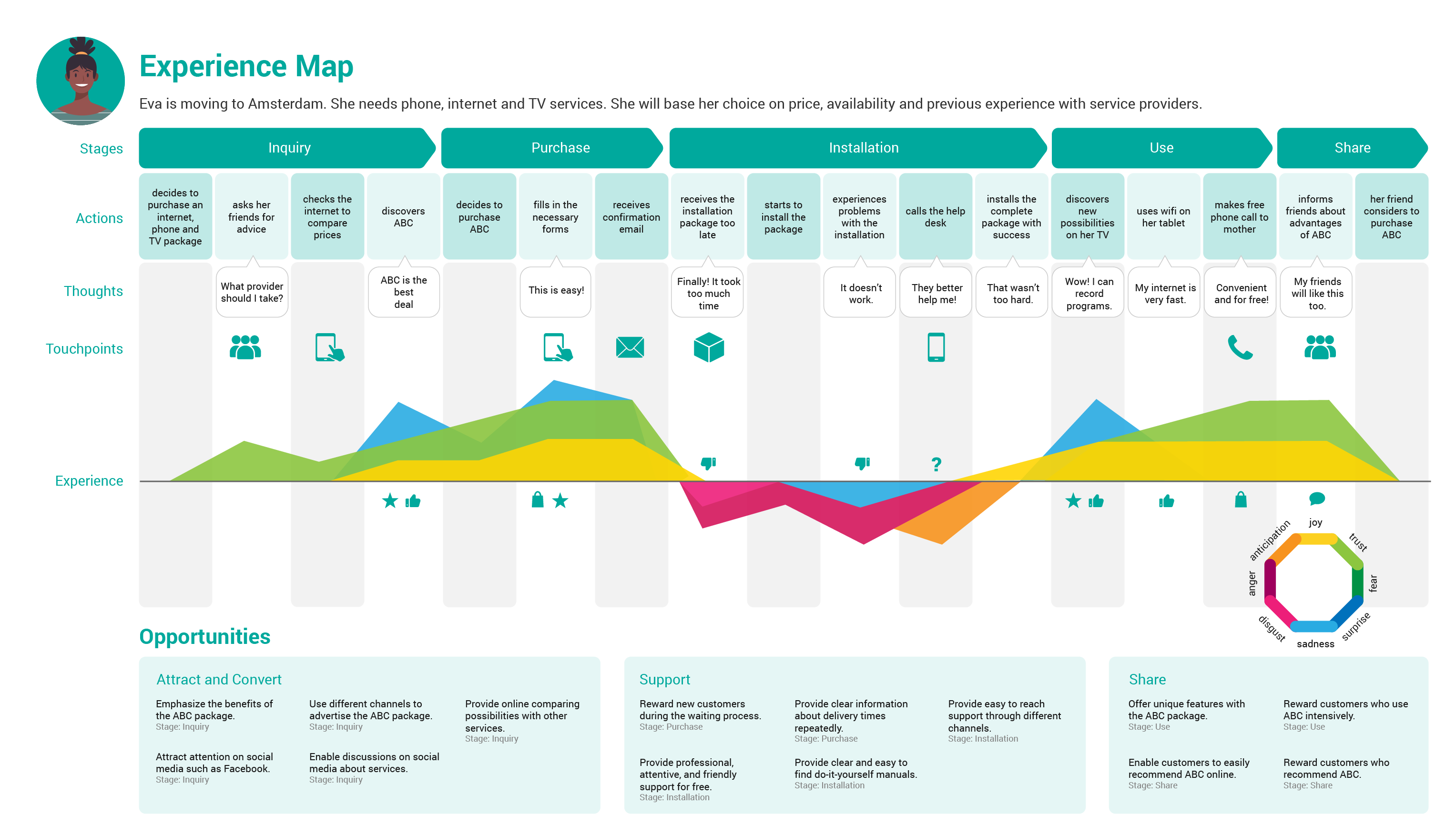
Good for: getting loads of detail into a single template.
Not so good for: considering the lifecycle of a customer relationship rather than a single transaction.
“The Mystery Shopper” Journey Map Template 3
Our next template takes its cue from the proven principle of ‘mystery shopping’. This is less of a dashboard view for the journey map itself and more of a thinking framework for putting the journey map into the appropriate context. The idea is to enable a deeper dive into the customer experience.

Good for: approaching the whole customer journey mapping challenge in the right way.
Not so good for: documenting the various components of a journey map.
“The Cartoon Strip” Journey Map Template 4
This is a really visually-driven template that breaks down human interactions into a series of stages using cartoon-like graphics. We think it could help very process-driven companies remember to keep people front and center in their thinking. Plus there’s plenty of scope for providing added detail around action points, systems and platforms.

Good for: bringing the customer journey to life with lots of question ideas.
Not so good for: charting the ebb and flow of customer satisfaction.
“The Departmental” Journey Map Template 5
This template breaks the mould of many others by showing journey stages as a perpetual lifecycle. No space is given over to icons and graphical flourishes – this is text-based all the way, but its subtle color-coding gives it an easily accessible style. The big feature is how it shows the implication/s upon internal departments, which is unique to this template.

Good for: helping understand wider organisational implications of the customer journey.
Not so good for: providing sample questions for eliciting feedback at various stages.
“The Keep it Simple” Journey Map Template 6
Our last template manages to keep the customer journey map nice and simple without compromising too much detail. It’s all about touchpoints, questions and systems and how they link into stages of the customer lifecycle. There’s plenty that could be used to embellish it, but we think this is ideal for a first foray into customer journey mapping.

Good for: quickly and easily getting the basics down on paper.
Not so good for: showing every contextual aspect to maximize journey map understanding.
How to create a customer journey map
Once you’ve chosen a customer journey map template, the next step is to fill it with information about the real customer experience.
1. Define the journey you want to map
Decide whether you’re mapping the entire customer lifecycle or a specific journey, such as making a purchase, onboarding or getting help from customer support.
2. Identify your customer persona
Be clear about whose experience you’re mapping. Different customer groups can have very different goals, expectations and journeys.
3. Establish the journey stages
Break the journey into logical stages. Depending on your business, these could include awareness, consideration, purchase, onboarding, use, support and renewal.
4. Map the customer touchpoints
Identify where customers interact with your business during each stage. These could include your website, emails, sales conversations, support tickets, calls or interactions with your product or service.
5. Add customer goals, actions and questions
For each stage, consider what the customer is trying to achieve, what they’re doing and what questions or expectations they have.
6. Use customer evidence and feedback
Don’t build your journey map entirely around assumptions. Use customer feedback, support conversations and other customer data to understand what people are actually experiencing at different touchpoints.
7. Identify gaps and opportunities
Look across the completed journey for friction, gaps and patterns. Where are customers struggling? Which touchpoints are working well? Where could you make the experience easier?
8. Keep your journey map up to date
Customer journeys change over time. Revisit your map as your products, services and communication channels evolve, and use ongoing customer feedback to keep it grounded in the real customer experience.
Mapped your customer journey? Now start measuring it.
Collect quick, one-click feedback at key touchpoints throughout the customer journey with Customer Thermometer.
Need to get light-touch, transactional feedback from different aspects of your customer journey? Get a free trial here:
(This post was last updated on September 28, 2026)
By Lindsay Willott Updated